TWENTY YEARS OF REFLECTION ON VIETNAM'S SUPPORTING INDUSTRIES
A Manufacturing Practitioner's Perspective
Someone once asked me:
You have spent twenty years pursuing a field that few people know and even fewer fully understand. Have you ever regretted it?
I remained silent for quite some time.
Not because I lacked an answer, but because nearly twenty years cannot be reduced to a simple yes or no.
It has been a journey filled with hopeful days, but also moments of exhaustion when I wanted to stop. Some investments took years before producing a result.
Some parts had to be made repeatedly because of a deviation of only a few hundredths of a millimeter.
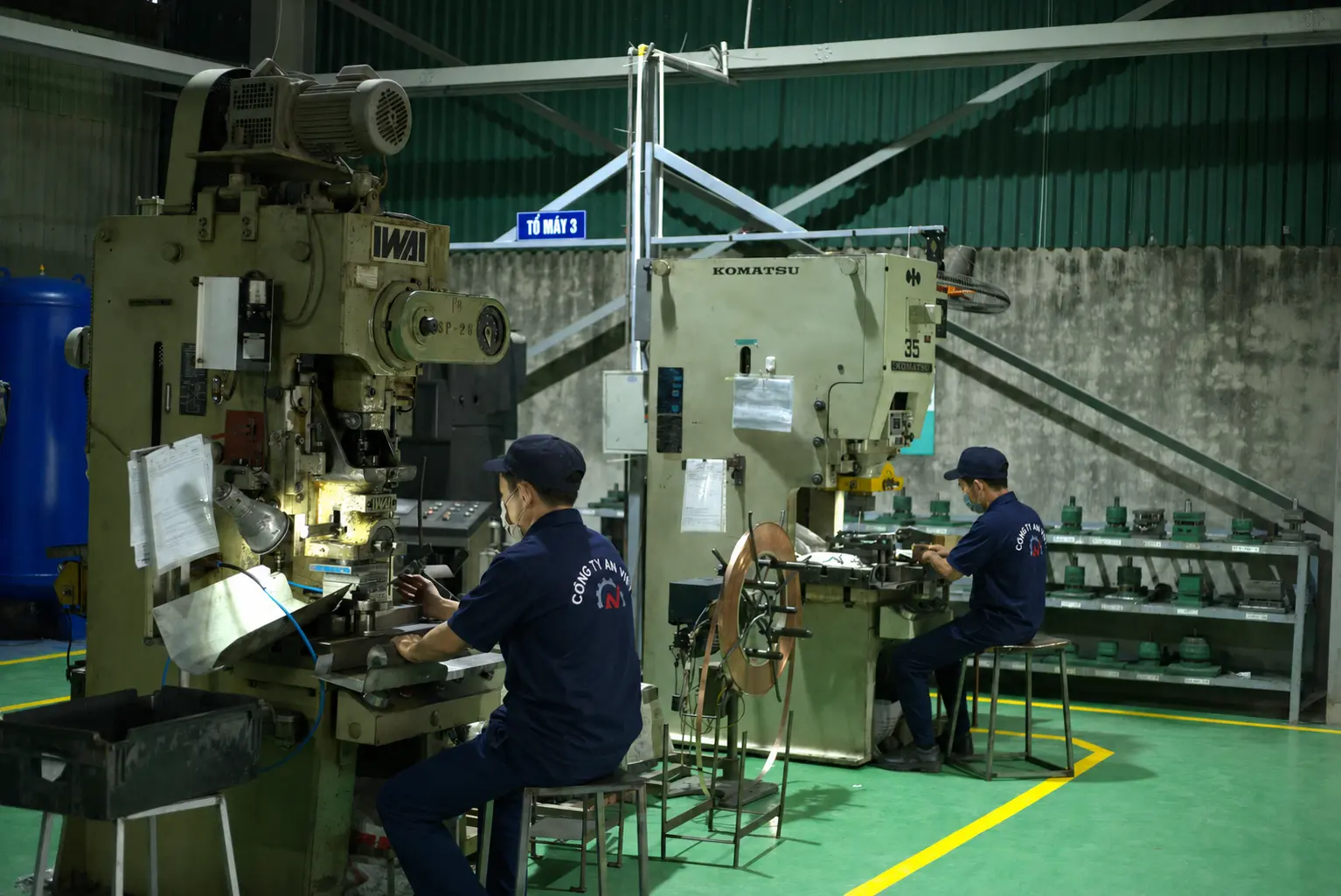
There were also quiet efforts that could be fully understood only by those standing beside the machines, working on the dies and checking each technical detail.
If I had wanted easy work, low investment and a quick return, I would probably not have chosen this path.
Supporting-industry manufacturing is not glamorous.
It demands patience, discipline and the willingness to travel a long distance before seeing a meaningful result.
Yet it was precisely through those challenges that I gradually understood:
Some professions may never make a person famous, but they help build the strength of an entire industrial economy.
That is why I stayed.
Not only because of a job, but because of a conviction.
Throughout nearly twenty years, I have always believed that no advanced industrial nation can exist without strong supporting industries.
People usually see the finished product.
Few see the tens of thousands of components that quietly create its value.
Behind every automobile, aircraft, electronic device and production line lies a combination of technology, discipline, precision and professional pride.
Supporting industries may not stand at center stage, but they provide the foundation on which the entire stage is built.
Vietnam recognized this importance early. The Party and the State have identified supporting industries as strategically important to national industrialization and modernization. Turning policy into industrial capability, however, is always a demanding journey.
This is a difficult field.
It is difficult to establish effective mechanisms and policies.
It is difficult to build an ecosystem of capable enterprises that can participate deeply in global supply chains.
On that journey, the establishment of VinFast became a milestone of which Vietnam can be proud.
Whenever I see a Vietnamese-brand vehicle on the road, I feel proud. Yet that pride is accompanied by a question:
How many of the components inside that vehicle were made by Vietnamese enterprises?
This is not a question intended for comparison. It is a question that urges supporting-industry manufacturers like us to keep improving.
Localization is more than a percentage. It reflects a country's command of technology, the resilience and self-reliance of its manufacturing base, and the real strength of its industrial economy.
For nearly twenty years, An Viet, like many other Vietnamese supporting-industry enterprises, has continued quietly along this path.
What we hope to see is an increasing number of components inside Vietnamese-brand products being manufactured by Vietnamese companies.
We have always believed:
No component is insignificant when it contributes to a major product. No supporting-industry enterprise is insignificant when it adds value to the nation's industrial base every day.
What we are doing today may be only the first bricks.
But every great structure begins with those first bricks.
If each generation adds another brick with responsibility, professional pride and a desire to contribute, I believe the day will come when Vietnam has strong supporting industries, enterprises that master technology and manufacturing, and suppliers confident enough to stand in global supply chains.
When that day arrives, the world will see more than products carrying Vietnamese brands.
In even the smallest component, it will see Vietnamese knowledge, resilience and ambition.
This is not An Viet's aspiration alone.
It is the aspiration of many people who have quietly devoted themselves to Vietnam's supporting industries.
Building supporting industries today means building the self-reliant industrial capability Vietnam will need tomorrow.
DAO VAN KINH
Director, An Viet Industrial Co., Ltd.